The Fundamentals of Model Validation
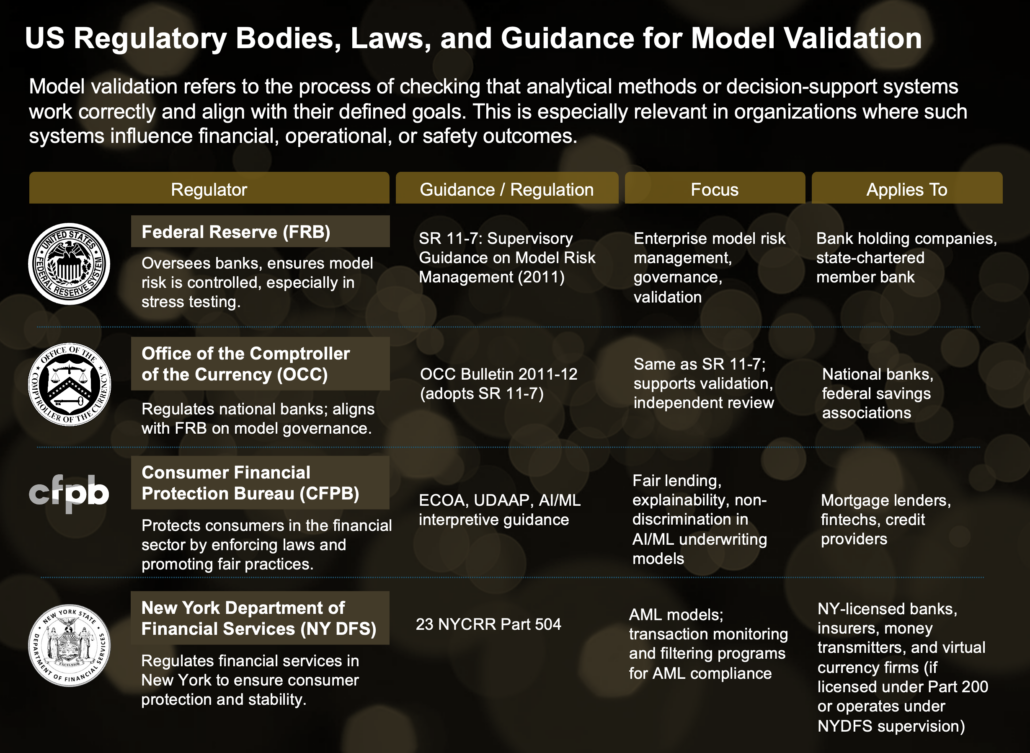
MODEL VALIDATION | US
The US Regulatory Landscape for Model Validation
Model validation refers to the process of checking that analytical methods or decision-support systems work correctly and align with their defined goals. Model risk refers to the potential for incorrect or inappropriate decisions based on the use of models and includes the following:
- Model Development, Implementation and Use: Should include disciplined and knowledgeable development and implementation process consistent with the situation, the goals of the model user and the bank policy.
- Model Validation Process: Should include processes to verify models perform as expected, meeting design objectives and business uses. All components such as input, processing, and reporting must be validated, whether outsourced or in-house.
- Model Governance, Policies and Controls: Should develop and maintain strong governance, policies and controls over the model risk management framework which defines the roles and responsibilities to clearly communicate model assumptions and limitations, as well as clarify the authority of restricting model usage.
NYS DFS Part 504 Transaction Monitoring and Watchlist Filtering Programs
COMPLIANCE CERTIFICATION PART 504 | NYS DFS
Part 504 Program Requirements for All Bank and Non-Bank NY Regulated Institutions
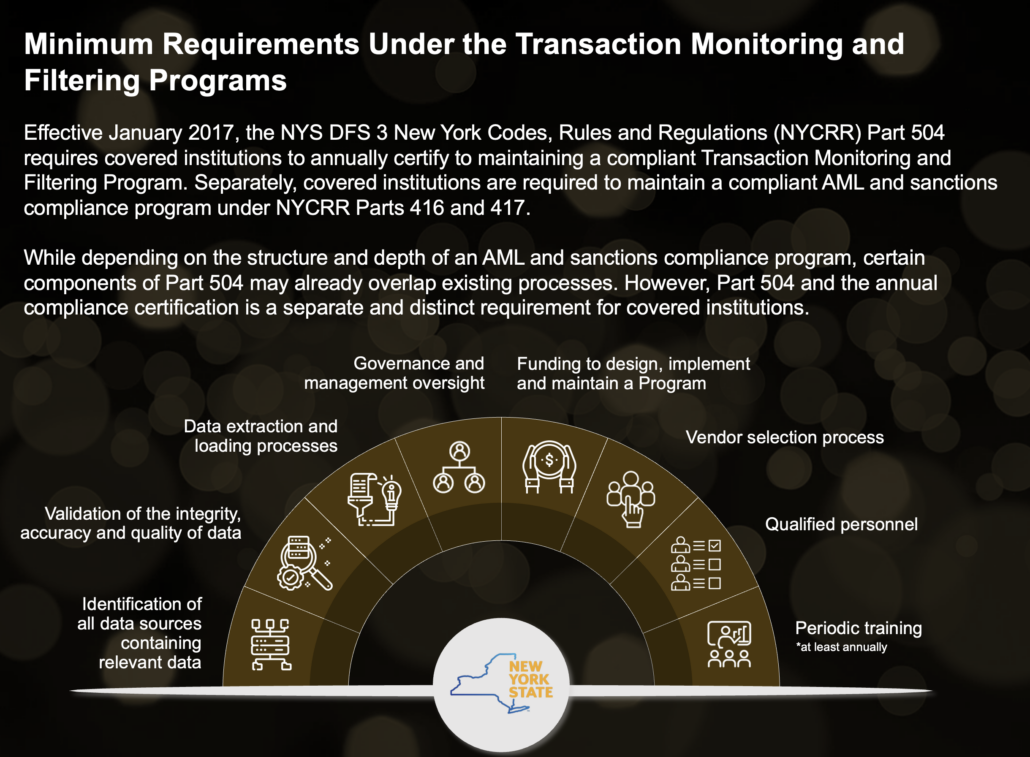
Effective January 2017, the NYS DFS 3 New York Codes, Rules and Regulations (NYCRR) Part 504 requires covered institutions to annually certify to maintaining a compliant Transaction Monitoring and Filtering Program. Separately, covered institutions are required to maintain a compliant AML and sanctions compliance program under NYCRR Parts 416 and 417.
While depending on the structure and depth of an AML and sanctions compliance program, certain components of Part 504 may already overlap existing processes. However, Part 504 and the annual compliance certification is a separate and distinct requirement for covered institutions.
Each Regulated Institution shall maintain a Transaction Monitoring Program for the purpose of monitoring transactions after their execution for potential BSA/AML violations and Suspicious Activity Reports (SARs), which may be manual or automated. Each Regulated Institution shall maintain a Watch List Filtering Program for the purpose of interdicting transactions, before their execution, that are prohibited by applicable sanctions, including OFAC and other sanctions lists, politically exposed persons lists, and internal watch lists, which system may be manual or automated.
Other Relevant Spotlights
DATA PRIVACY
Handling and Protecting Personal Sensitive Information
A Spotlight on the Global Regulatory Emergence of Consumer Privacy
KNOW YOUR CUSTOMER
Knowing Your Customer Data Journey
A Spotlight on Standards for Know Your Customer (KYC) Framework and Procedures
BANK SECRECY ACT | US
Key Aspects of Regulatory Reporting and Recordkeeping Requirements
A Spotlight on Reporting Requirements for Covered Financial Institutions under the Bank Secrecy Act (BSA)

RISK | STRATEGY | CYBER COMPLIANCE MANAGEMENT